Property Sold, TDS Paid—But the Problem Appeared Later
Audio Note
The property was sold, TDS was deducted, the challan was paid, and registration was completed. Months later, a PAN-wise TDS reporting error surfaced while the sellers’ Income Tax Returns were being prepared.
In a co-ownership property transaction, paying the tax is only half the job—reporting it correctly is equally important.
Property Sold. TDS Paid. Problem Discovered Months Later.
A co-ownership reporting error can remain hidden until ITR filing.
The property transaction looked complete: the buyer deducted TDS, the challan was paid, and the registration was finished.
Everything seemed to be in order—until the sellers began preparing their Income Tax Returns months later.
Everything Seemed to Be in Order
The transaction had crossed every visible milestone.
The property had been jointly owned by a husband and wife. The buyer deducted and deposited the TDS, and the sale proceeded without any apparent issue.
However, the entire TDS credit was reported against only one seller’s PAN.
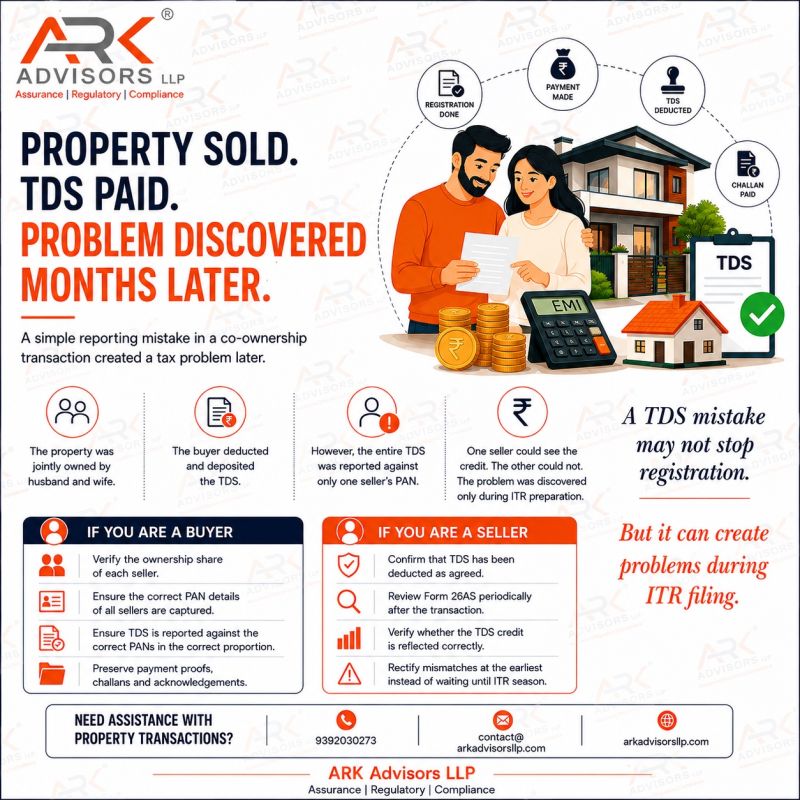
Co-owned property sale with TDS payment, challan submission, and registration completed.
Joint Ownership
The property belonged to more than one seller, so each owner’s details and ownership share needed careful attention.
TDS Was Deducted
The buyer deducted and deposited the tax, creating the impression that the compliance requirement had been completed.
Credit Mismatch
The entire TDS credit appeared against only one PAN, leaving the other seller unable to claim their share.
Why the Problem Appeared Months Later
The issue was not visible during registration.
A small reporting error went unnoticed while the transaction was being completed. The mismatch surfaced only when the sellers reviewed their tax records during ITR preparation.
By then, the property had changed hands, payments had been made, and the registration was complete—but the compliance issue remained.
TDS Compliance Is More Than a Formality
Correct payment and correct reporting must go together.
Property buyers and sellers often spend weeks negotiating prices, verifying title documents, checking encumbrance records, and discussing registration expenses.
Yet TDS compliance is sometimes treated as a routine formality. In co-ownership transactions, incorrect PAN-wise reporting can create problems long after the sale is completed.
Illustration showing a TDS credit mismatch discovered after a property transaction.
Credit Mismatches
One seller may be unable to claim the TDS credit that should have been reflected against their PAN.
Correction Filings
Incorrect reporting may require follow-ups and correction work after the transaction has already been completed.
Refund and ITR Delays
A mismatch can complicate return filing, delay refunds, and create avoidable stress during tax season.
Before Closing a Co-Ownership Property Transaction
Both buyers and sellers should verify the reporting trail before treating the matter as complete.
Careful verification at the transaction stage can prevent months of follow-up later. The following checks help reduce the risk of a PAN-wise TDS mismatch.
If You Are a Buyer
Verify every seller’s details before submission.
- Verify the ownership share of each seller before deducting TDS.
- Ensure the correct PAN details of all sellers are captured.
- Report TDS against the correct PANs in the appropriate proportion.
- Verify all challan details before submission.
- Preserve payment proofs, challans, and acknowledgements.
If You Are a Seller
Do not wait until return filing season to check the credit.
- Confirm that TDS has been deducted as agreed.
- Review Form 26AS periodically after the transaction.
- Verify that the TDS credit is reflected correctly.
- Ensure the ownership share considered for reporting is accurate.
- Rectify mismatches at the earliest.
Verify PAN Details
A correct PAN is essential for ensuring that the TDS credit reaches the intended seller.
Check the Reporting Proportion
In co-ownership transactions, the reporting should accurately reflect the ownership and payment arrangement.
Preserve the Records
Keep challans, acknowledgements, payment proofs, and transaction documents available for future verification.
Paying the Tax Is Only Half the Job
Reporting it correctly is equally important.
A TDS mistake may not stop the registration, but it can create complications long after the property has changed hands.
Early verification can save buyers and sellers from credit mismatches, delayed refunds, and unnecessary follow-ups. Property transactions can involve fact-specific tax implications, so professional guidance should be taken where required.
Have you ever come across a TDS mismatch in a property transaction?
FAQs
What is a TDS credit mismatch in a property transaction?
A TDS credit mismatch occurs when the tax deducted and deposited is not reflected correctly against the intended seller’s PAN. This can prevent a seller from claiming the credit while filing their Income Tax Return.